The Gift of Showing Up
The Gift of Showing Up
By Pamela Haines
It was a rich and wonderful experience, and nothing about it was easy.
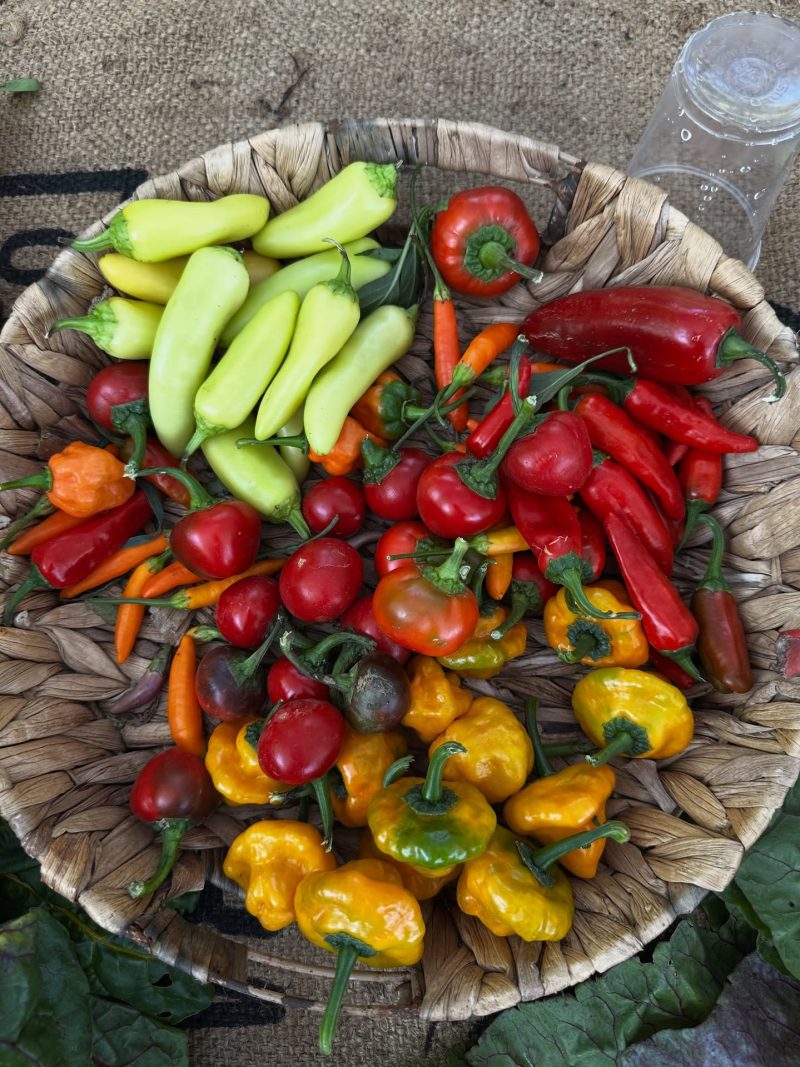
Building on dual passions, for urban agriculture and for connections across barriers that divide us, I joined the board of a local urban farming project years ago. The farm, then a white-led initiative in a black neighborhood, was full of everything that is right and everything that is wrong in our society. It was a rich and wonderful experience, and nothing about it was easy.
As we struggled with the problems of any small non-profit, with scarcity on all fronts, we also found ourselves dealing with gut-wrenching staff issues centered around gender and race, all within the context of an unfulfilled vision of local leadership, and ever-present second-guessing about the appropriateness of white people like me being involved at all.
I had to look hard at the ugliness of racism as it affected all of us in so many ways. Several years in, I found myself leading the board because no one else would, and we all knew I could. I felt the weight of the farm’s survival heavy on my shoulders as I tried to nurture new board members and staff of color, follow the leadership that was there, and hold everything together in the face of unrelenting challenges.
Our commitment to grounding the farm back in its neighborhood led to a shared decision not to make a new administrative hire until we could hire locally, which led to more work for our one farmer, a greater burden on the few remaining board members, and an increasingly stressed context for both program work and fundraising.
We did amazingly well under the circumstances, made good decisions, survived, and I’ve never regretted the choice to put so much time and energy into nurturing this jewel of an urban farm. I loved being around all the people who love it, and have known it to be a gift in my life. One fellow board member, who clearly valued me but didn’t reassure or comfort my whiteness, shone a light on parts of me that might otherwise have gone unexamined. It would have been so much easier if I’d looked away and settled for smaller challenges!
After a string of very hard years, there was a turnaround—with new local board members of color, some very successful grant-writing, and a vision on the part of our new board leader to transform to a cooperative model. That first newly-expanded and energized board meeting brought more unexpected emotional work for me. Now, rather than feeling overwhelmed by just trying to keep the farm afloat, I was overwhelmed by feelings that I was no longer needed—clearly the wrong color, in the wrong place.
I fought my way, slowly and painfully, to the perspective that it was not my job to act preemptively on the assumption that I wasn’twelcome, even if I’m white, even if it would feel easier to give up and disappear. It wasn’t mine to make assumptions about how others perceived me. That was their job. My job was to keep showing up as fully as I knew how, despite my feelings, and to let others take the lead in working out the racial composition of the board going forward and evaluating my contribution. At some point, everything I was doing might well be adequately and more appropriately done by others, but I could still be fully present till then. I could continue to treasure the relationships that were built through struggle over the years. I could even make new ones.
In the midst of all this hard work—emotional and otherwise—I had the opportunity to support a young climate activist friend. His vision, commitment, and initiative had put him in the center of the national climate movement, with all its contentious issues around turf, leadership, and direction, and with opportunities to make race-related mistakes at every turn. He was engaged in a delicate racially charged alliance-building project and glad for the attention I could offer.
What became abundantly clear was that living through the challenges in my own little corner of the world had set me up to understand, experientially, the challenges he was dealing with. By bringing my own hard-won experience to the table, knowing in my bones something of what he was going through, he could rest in feeling seen and understood. He could use the space I was able to offer to look at his hardest feelings, regain perspective, and think freshly about next steps. As I stretched to bring everything I had to support this man I loved, doing work that mattered deeply to me, I was thankful beyond words for the gifts I had been given by the farm.