Potatoes, Prayers, and Prisons: A Quaker Study Tour of Bolivian Resilience
Potatoes, Prayers, and Prisons: A Quaker Study Tour of Bolivian Resilience
Jonny Costello
For two weeks at the beginning of January, I was lucky enough to have the opportunity to accompany the “Quaker Study Tour” on a trip to Bolivia. The trip is organized by the Bolivian Quaker Education Fund, and it would not have been possible without the diligent hard work of Rebecca Day Cutter. On the trip, I got to meet a host of Bolivian Quakers, not to mention the wonderful cohort of Quakers, volunteers, and translators that I traveled with.
It is hard to discern what is most important to write about in that time spent there, but since I went as a representative of Quaker Earthcare Witness, I will focus on some of the inspiring Earthcare initiatives I observed in Bolivia.
First, let me tell you about Emma Condori’s work with Friends International Bilingual Center. Emma Condori, who may be familiar to some, is the author of Quakers in Bolivia. As part of her work, she oversees a program that provides food relief to Aymara highland villages whose potato crop has been destroyed by drought and other shifts and escalations in climatic conditions. The Aymara people rely heavily on potatoes, both culturally and for survival. In 2022, after planting in October, a prolonged drought in November and December meant that the January rainfall was insufficient to save the crop. Entering 2023, hundreds of families were facing starvation, left with virtually no food except what was preserved from previous years. In March and April, Emma and volunteers drove out to the communities with potatoes, having raised enough money to feed 150 families. Many of the volunteers were Quaker youth, especially women.
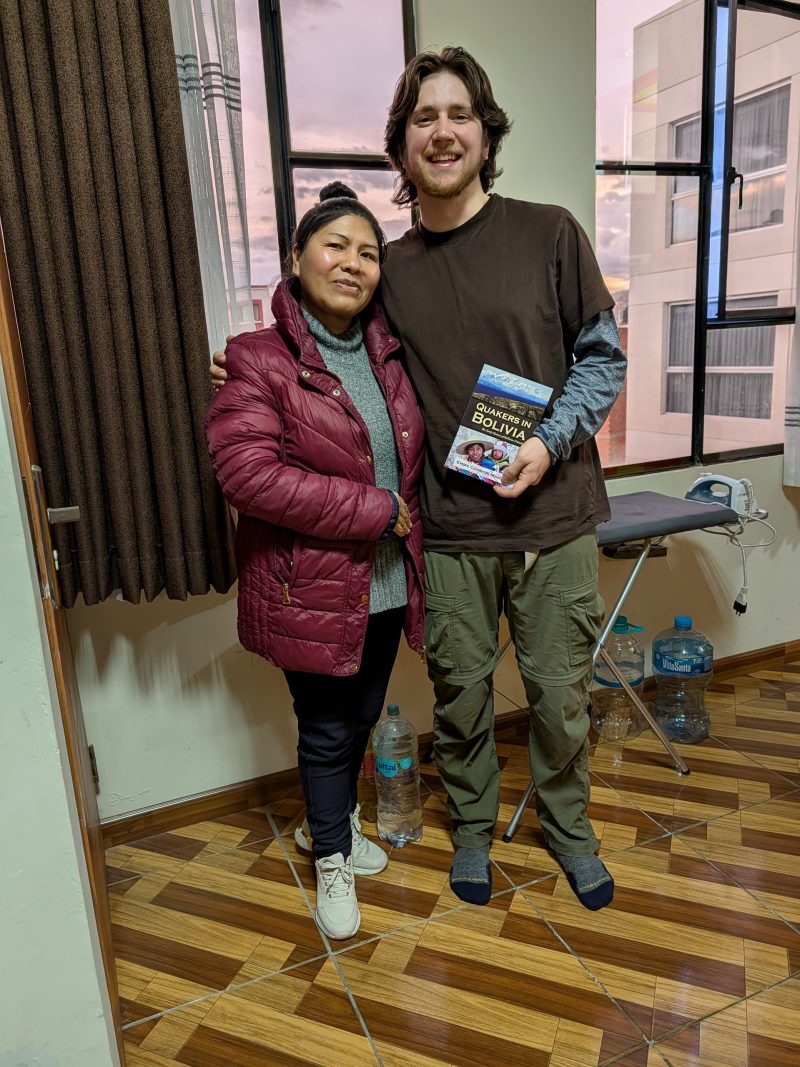
Having lost their potato crop, the farmers also lost the seeds for the next season. Emma traveled to meetings at the New England Yearly Meeting to fundraise and successfully raised funds for potato seeds for 300 families.
The program continues to provide food relief and is now run by a young woman named Sara. She emphasized that there is something spiritual about delivering food to these communities. It’s not merely about dropping off food but is instead an act of fellowship, worship, and song. This approach deepens and strengthens the relationship between the volunteers and the communities.
Talking with Sara and Emma was a helpful reminder that Earthcare absolutely includes peoplecare. The work is not only about becoming more resilient to disasters, preventing them, and recovering from them. The work is also in caring for the people affected by them and building community with them. In building community, we build resilience. Especially now, it is easy to look at all that is happening and say, ‘I don’t have the energy for environmentalism, I’m more focused on the injustices happening to my neighbors.’ I’m not one for correcting people usually (or at least strangers), but I do really believe that caring for people and building more resilient communities is Earthcare. We are of the Earth after all.
Many Quakers in the United States are familiar with the Alternatives to Violence Project (AVP). In Bolivia, it is referred to as PAV, short for El Proyecto Alternativas a la Violencia.
If you are familiar with AVP, you probably know that many workshops take place inside prisons, and the same is true for PAV. Our group accompanied Magalie Quispe Yujra into a maximum security prison called San Pedro de Chonchocoro. There, we met block leaders who had completed PAV workshops. I especially liked hearing the adjectives that went with their names, and celebrating each other after sharing with a Quakerly, silent, sparkly hands.
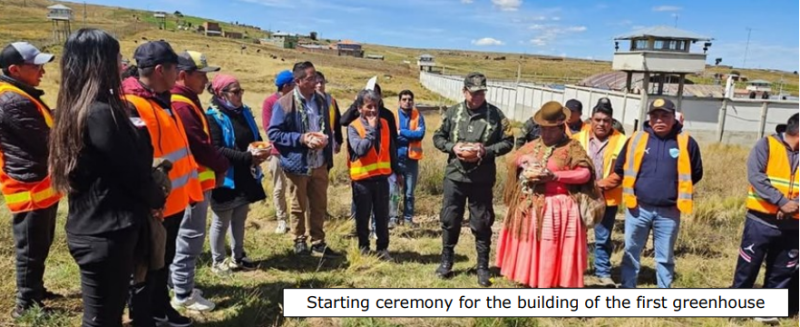
While in Chonchocoro, we witnessed the grand opening of two new greenhouses where prisoners could grow food. These greenhouses were constructed entirely from naturally occurring materials, primarily clay and dirt from the surrounding area. The funds for this project were provided by Quaker Bolivia Link (QBL), with support from the German Quaker charity Quaker Hilfe and the prison governor. This was one of QBL’s final acts, as its Trustees recently decided to lay down the charity.
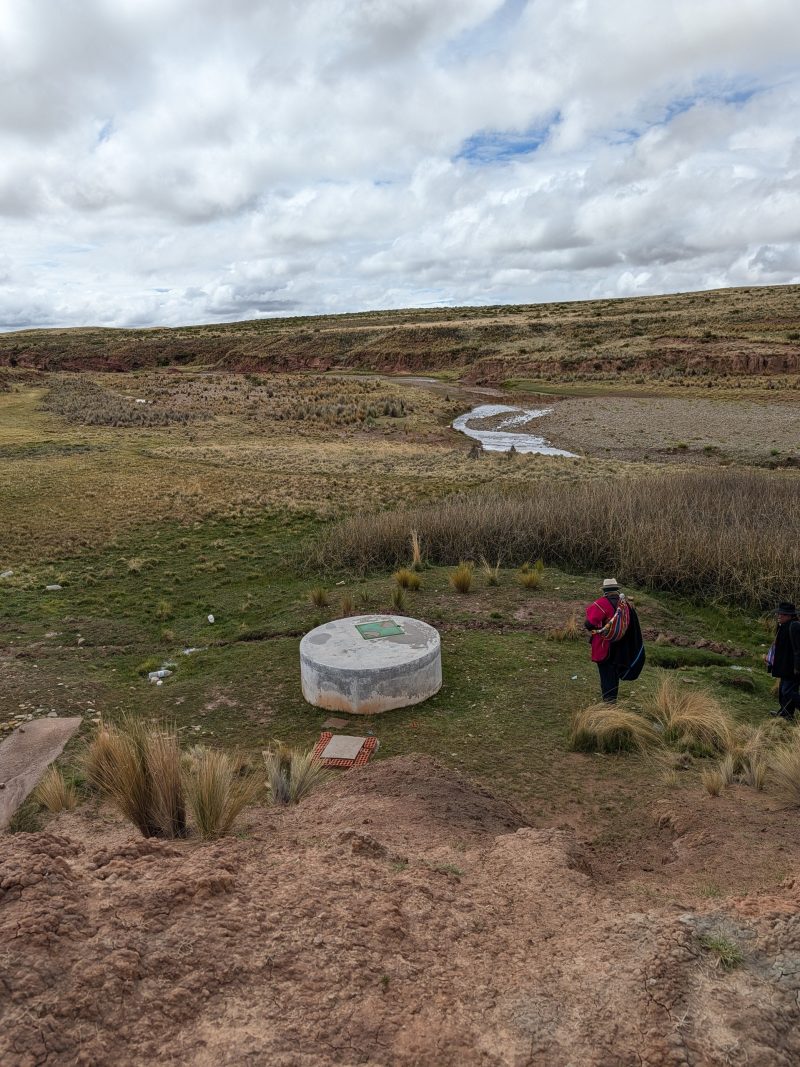
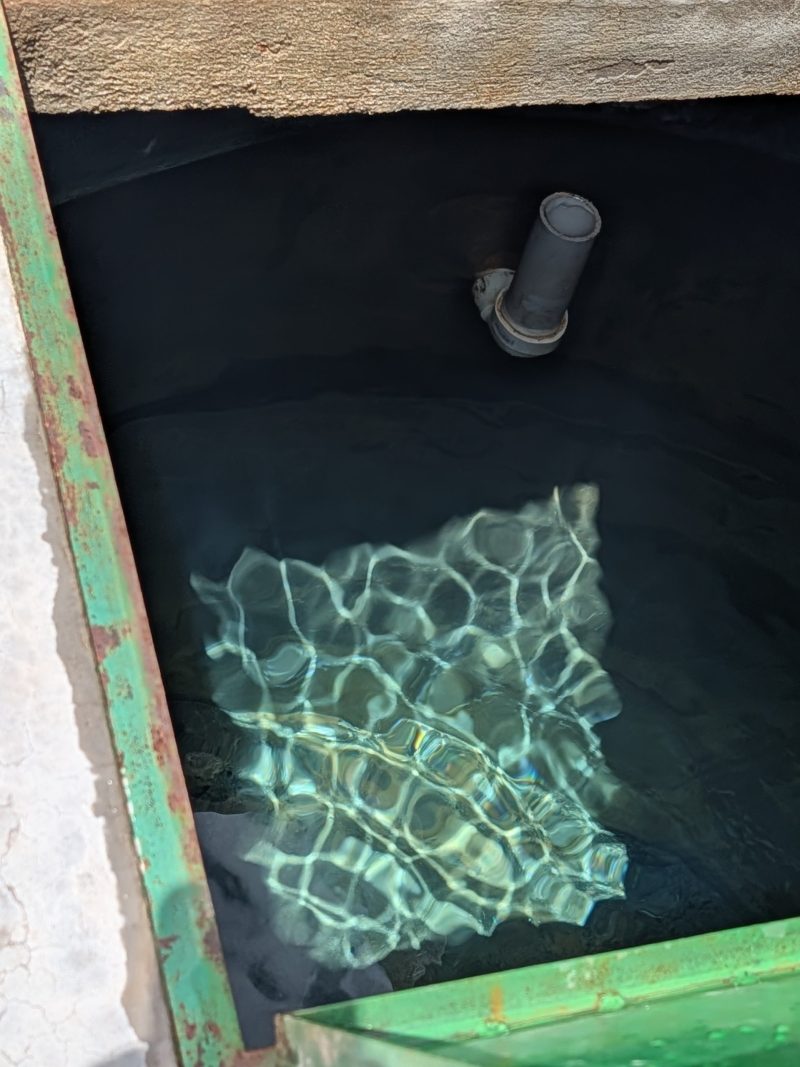
Speaking of peoplecare and QBL brings me to my next story. One of the things I felt luckiest about was getting to visit Aymara communities in the highlands around El Alto and La Paz. Two of these communities had recently received support from QBL to filter and pump water to their communities, rather than having to carry it from the spring.
The two pumps are completely solar powered. More than that, though, they allow Aymaran culture to persist in these communities. Many children of the communities end up moving to cities for school and work, leaving the communities increasingly older. The accessible fresh water makes life and day-to-day tasks significantly easier for older community members, and it also makes it easier for children to stay in the communities if they so choose.
The work in Bolivia reminded me that we do not face the climate crisis in isolation. When we deliver food or pump water, we are also delivering hope and strengthening our global Quaker family.
Query: How can we move beyond fixing problems to a place of true fellowship and mutual accompaniment with those impacted by environmental change?
Jonny Costello is our QuakerEarth Organizing Fellow, working to expand our Action Map through our connection with Quakers globally.
Join the Journey: This trip was part of the annual Quaker Connections Study Tour organized by the Bolivian Quaker Education Fund. BQEF provides scholarships for higher education, and access to non-formal education, through training in non-violence. If you feel led to witness this work in person, BQEF offers these tours to build solidarity between North and South American Friends. Visit BQEG.org.
Support the Work: You can learn more about Emma Condori’s vital work with the Friends International Bilingual Center and their efforts in climate education and food relief. Visit CentrobBilingueInternacionalAmigos.org
Continuing the Legacy: While Quaker Bolivia Link (QBL) has recently laid down its formal charity status, its impact lives on through the solar-powered systems and greenhouses now maintained by local communities. You can read their final newsletter at QBL.org.
Stay Connected: To learn more about how QEW is engaging with environmental justice globally learn about our Mini-Grants program at QuakerEarthcare.org/Mini-Grants.
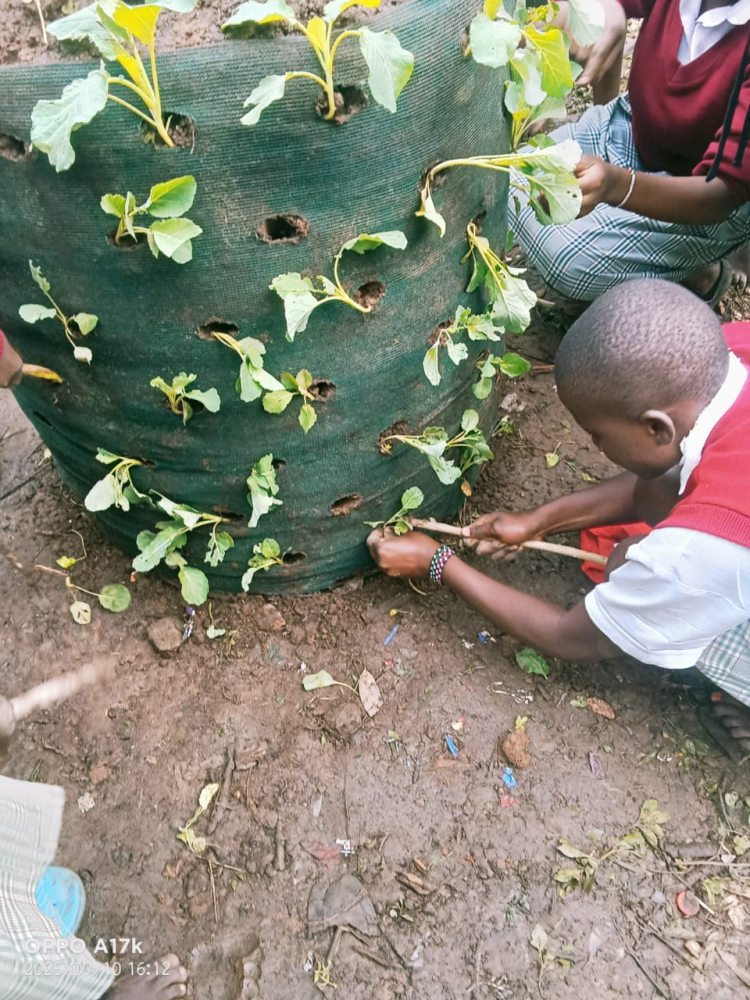
Handidi Junior School has transformed its grounds into the Handidi Green Patch with the help of a QEW mini-grant.